Young people, bishops explore how faith can guide use of AI
As artificial intelligence continues to shape the way people learn, communicate, and work, young Catholics from across the Archdiocese of Newark gathered on July 15 for a conversation about how faith can help guide the responsible use of emerging technology.
Hosted by the Office of Youth and Young Adult Ministry at the St. John Paul II Youth Retreat Center in Kearny, the “AI & Faith Dialogue” brought together young adults from several parishes with Auxiliary Bishops Pedro Bismarck Chau and Elias R. Lorenzo, O.S.B., who led a discussion on artificial intelligence.
The dialogue was part of a nationwide initiative by the National Federation for Catholic Youth Ministry. The federation invited dioceses across the country to explore how artificial intelligence is shaping the lives of young people and how the Church can respond in ways that promote faith, human dignity and authentic human flourishing.
AI as a tool for learning
During the July 15 discussion many of the young people who participated shared how artificial intelligence has become a resource for studying, organizing information, and improving their work. 
Alex from St. Helen Parish in Westfield shared how he uses NotebookLM, an artificial intelligence tool, to create helpful quizzes and flashcards. Bishop Chau said he also used the platform; after uploading the Synod on Synodality report, he had AI summarize key points, create study materials and even generate a podcast conversation about the document.
Bishop Chau emphasized that AI can serve as a helpful resource when it supports learning rather than replacing it. The bishop also noted how artificial intelligence has helped him with tasks, including translation. He said that tools like ChatGPT have made translating between English and Spanish more efficient, while still requiring careful review and discernment.
The importance of critical thinking and avoiding dependence
While participants acknowledged the benefits of artificial intelligence, many also expressed concerns about becoming too dependent on technology.
Emma from St. Helen Parish reflected that AI can make life more efficient when used properly, especially for learning and studying, but warned that overreliance could affect people’s ability to think critically.
“I think in the long run, it’s going to make all of our lives harder because I do think that it’s killing people’s ability to critically think about a lot of things,” she said. “Once people become too reliant on AI, it’s just dangerous.”
Peter from Our Lady of Mount Carmel Parish in Ridgewood emphasized that making mistakes is an important part of learning and growth.
“I’d rather get the question wrong and then learn from that mistake and grow from it than to just get the right answer knowing that I cheated,” he said.
Faith and human dignity
While acknowledging that AI can be a helpful resource, Bishop Chau cautioned against allowing technology to replace the gifts and abilities that God has given each person.
Reflecting on his own use of artificial intelligence, the bishop said that while he has used AI to generate ideas, he does not want to become dependent on it.
“I don’t want to lose the ability to write a homily, be inspired,” Bishop Chau said. “God has given me the ability to, from my soul, my spirit, what Scripture is telling me today and write myself.”
He also reflected on the impact AI may have on creativity, including areas such as graphic design, writing and music. “You lose that gift that God gave you,” Bishop Chau said, encouraging participants to continue developing their own creativity and abilities.
In a reflection shared following the event, Bishop Lorenzo referenced Pope Leo XIV’s encyclical Magnifica Humanitas:
For an algorithm, an error is a flaw to be corrected; for a person, however, an error can be a catalyst for profound change,” Pope Leo XIV writes. “A person’s future is not calculable but depends on one’s freedom — elevated by the inexhaustible grace of God — and on the relationships cultivated.” (Magnifica Humanitas, No. 128)
Bishop Lorenzo noted that as AI continues to transform society, “the Church has an important role in helping young people use technology wisely while remembering the God-given dignity, freedom, creativity and capacity for love that define every human person.”
The evening concluded with a reminder that technology, when approached with wisdom and discernment, can and should serve humanity. However, the conversation also affirmed that no tool can replace the relationships, creativity and other gifts that are central to human flourishing.

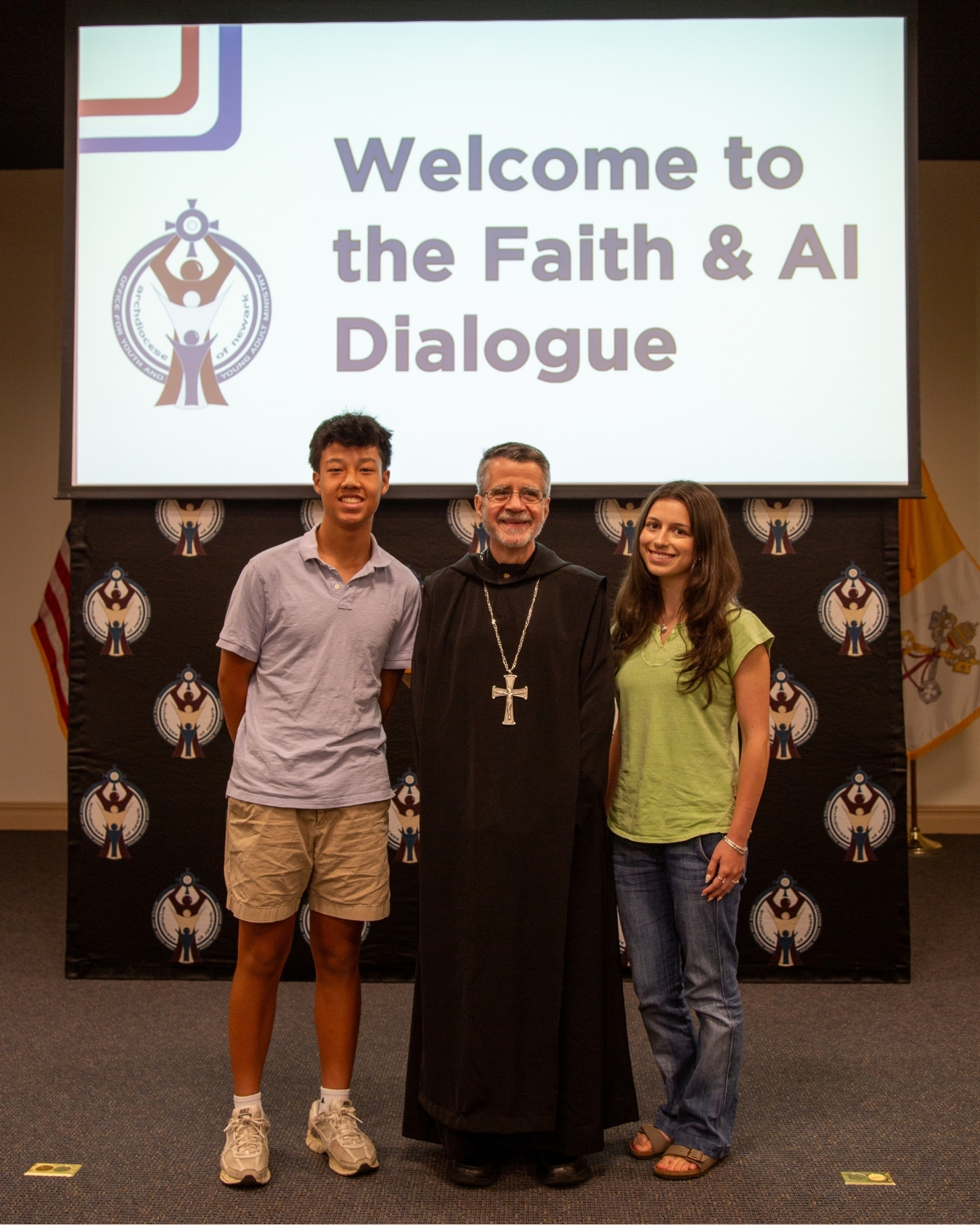
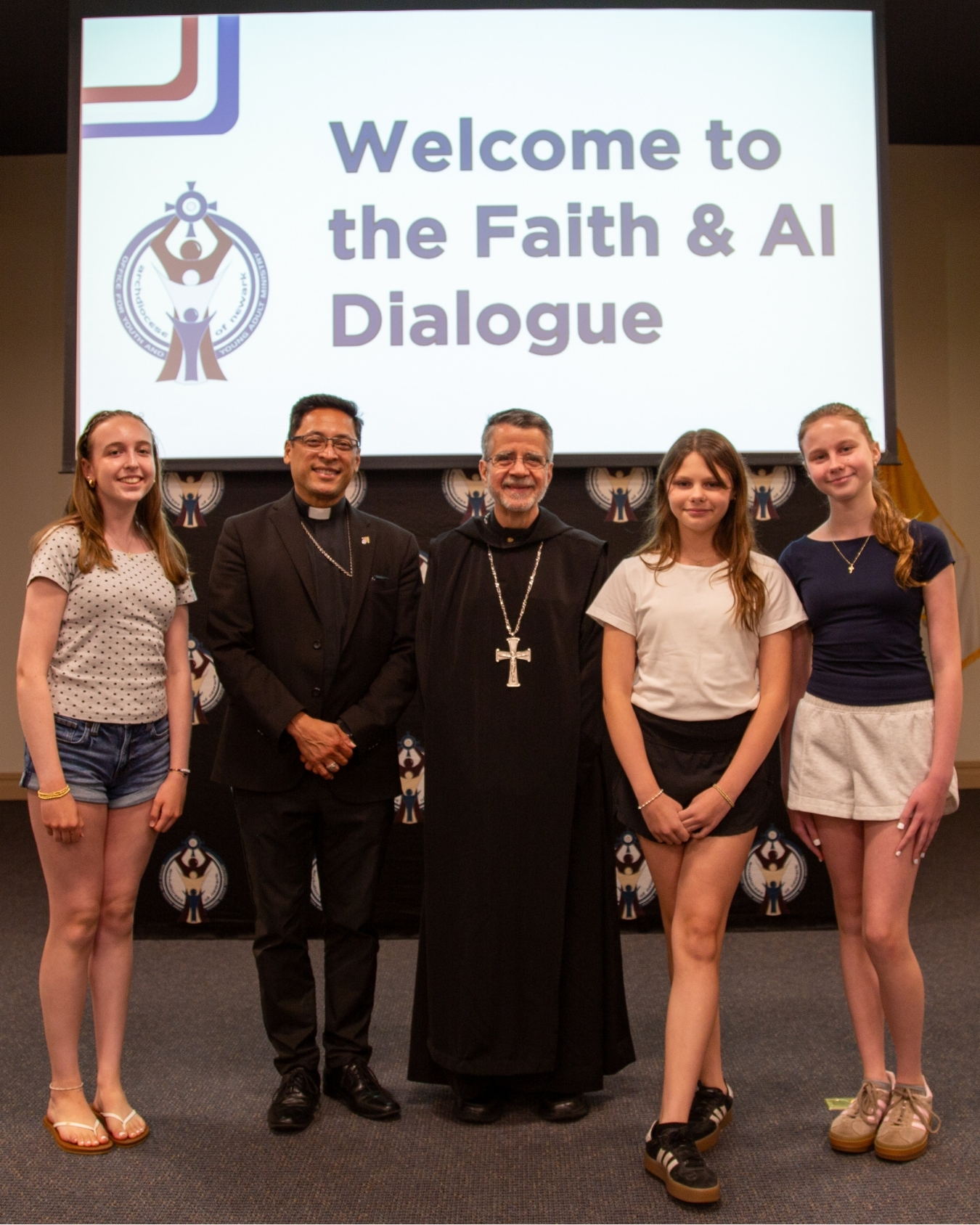
Featured image: The Office of Youth and Young Adult Ministry hosted an “AI & Faith Dialogue” on July 15 at the St. John Paul II Youth Retreat Center in Kearny, brining together young adults from local parishes with Bishop Pedro Bismarck Chau and Bishop Elias R. Lorenzo, O.S.B., for a discussion on artificial intelligence.