Latin Patriarchate on securing a future for Holy Land Christians
The Latin Patriarchate of Jerusalem has warned that the Christian presence in the Holy Land is going through one of the most critical moments in its 2,000-year history, calling for the transition from emergency response to investment in education, work, and special projects, giving families practical reasons to remain.
In an article titled “Hope Demands Action” released on Aug. 21, the patriarchate said restrictions on movement, the cancellation of work permits, and the paralysis of the tourism sector have exacerbated the conditions of Christian families in Bethlehem, Jerusalem, and the villages scattered in the West Bank and the Gaza Strip and have affected their ability to work and secure their needs.
Highlighting the challenges
The Catholic diocese — whose territory includes Cyprus, Jordan, Israel, and Palestine and is supported by six vicariates — highlighted that the unemployment rate in Christian communities in the Holy Land is 54%, which is about double the national average.
The patriarchate also pointed out that artisans, hotel workers, shopkeepers, tour guides, drivers, and restaurant owners rely heavily on pilgrims and visitors, which have significantly declined over the years, threatening livelihoods.
The patriarchate said the repercussions of the crisis extend to the younger generations, as limited job opportunities after university or vocational training may push young people to migrate, raising concerns for a generation that believes its future may be outside the land of its ancestors.
Gaza at the heart of the crisis
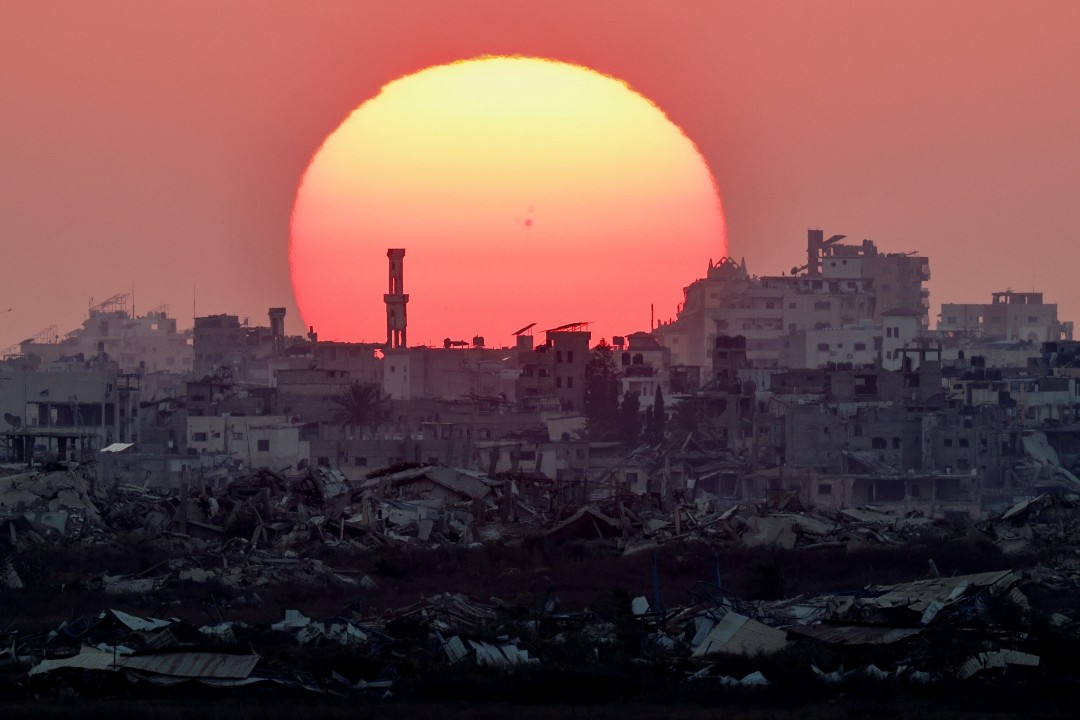
According to the patriarchate, only 541 Christians remain in the Gaza Strip, while others have been forced to flee and still others were killed in the war or lost their lives amid the collapse of medical care and lack of basic supplies.
The patriarchate said the possibility that no more Christians will be left in the Holy Land does not represent just a demographic change but a “crisis in history, identity, and faith,” stressing that a living Christian presence should remain in a land where Christianity originated.
The article called for international Christian solidarity to go beyond responding to emergency needs, including education, vocational training, special projects, and support for community institutions, allowing families to build a decent and sustainable life in their homeland.
Building a future with dignity
In this context, the article referred to a back-to-school initiative to cover basic educational expenses for children and families most in need, stressing that keeping schools open — and reopening them where possible — represents a message that destruction will not have the final say.
The patriarchate stressed that the Christians of the Holy Land do not want to be a part of the past but desire the opportunity to live, work, raise their children, and exercise their faith in dignity in the land where Christianity began.
This story was written by Sanad Sahelia. It was first published by ACI MENA, the Arabic-language sister service of EWTN News, and has been translated and adapted by EWTN News English.
Featured image: The sun sets over Gaza, as seen from the Israeli side of the border, Aug. 2, 2026. (OSV News photo/Amir Cohen, Reuters)