
How do I find my vocation? Answers from a vocation director
National Vocations Awareness Week (Nov. 2 – 8) is an annual celebration of vocations to the priesthood, diaconate, consecrated and religious life, and marriage. Catholics are encouraged to support those with a vocation or who are discerning a vocation through prayer and education.
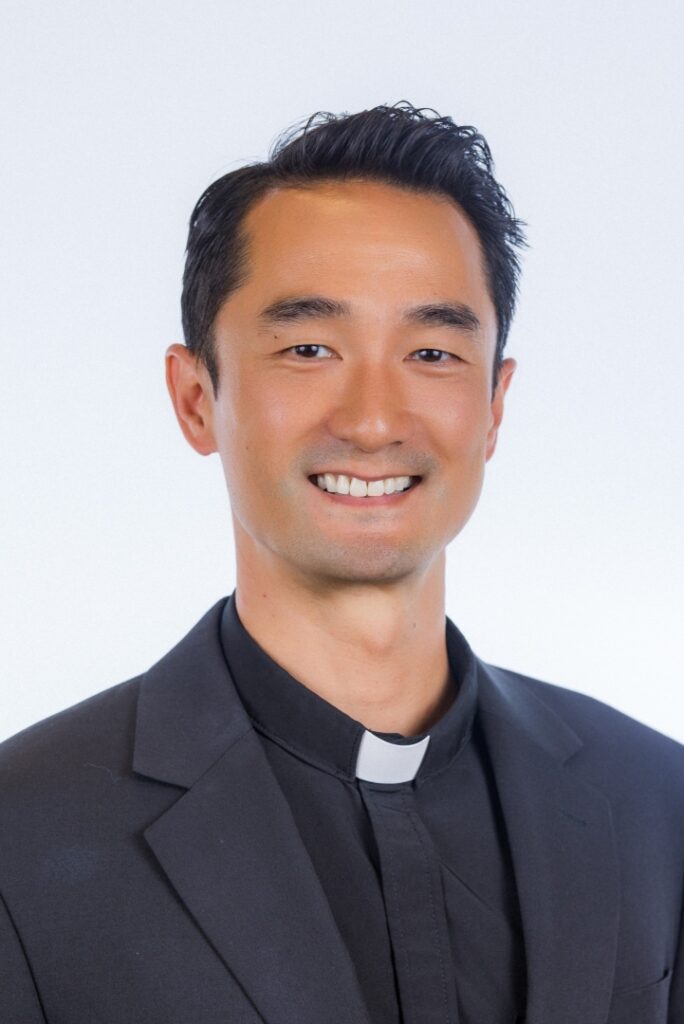
With that in mind, Jersey Catholic reached out to Father Patrick Seo, Director of Priestly Vocations for the Archdiocese of Newark, to ask some common questions people have about finding their vocation.
From his role fostering priestly vocations in the Archdiocese, Father Seo well understands that vocation seekers need guidance and understanding as God enters their lives and transforms them in unexpected ways. His own vocation journey was full of surprising turns. A native of Brooklyn who grew up in Englewood Cliffs, NJ, Father Seo initially pursued a career in medicine. That changed when he felt a call to the priesthood during his third year of medical school.
Even then, it was not clear to him whether he should be a diocesan priest or a monk, as he explains.
Jersey Catholic: We often hear that people need to “discern” a vocation. What does discernment consist of?
Father Seo: Let’s get a little nerdy here. The word “discernment” comes from the Latin dis- meaning “apart” and cernere meaning “to separate.” Discernment is a time of separating from all the many “squirrels” one experiences in life — those distractions that keep me from focusing on the Lord and the call he has placed within the deep recesses of my heart.
The essential prerequisite to discernment is following St. John the Baptist into the desert so that we can remove ourselves from the distractions of the world, cry out to the Lord, and await the coming of the Word of God into our lives, who invites us to follow him and discover the life to which he leads us to live.
If people feel that God may be calling them to a particular vocation, what should they do next?
Father Seo: Contrary to public opinion, a vocation is not a reality for an individual. A vocation is a reality within the context of the Church, the communion of persons in communion with Christ. As such, a discerner should first go to Christ in the greatest way that Christ has given himself to us, i.e. in the Eucharist. After Confession, increase Mass attendance during the week and regularly go to Eucharistic Adoration, daily if possible.
Next, the discerner should seek out faithful people who have already discerned and are living out their vocation. Seek out that married couple who go to Mass regularly with their children and serve in different ministries. Seek out your parish priest who clearly loves the Lord in the Eucharist and loves his people. Seek out the obviously joy-filled religious brother or sister and share in their joy. And from that group of faith-filled friends, seek a spiritual director who will walk with you during your discernment.
How did your own vocation manifest itself? Were you surprised when you realized God was calling you to be a priest?
Father Seo: I never wanted to be a diocesan priest until about six months before I entered seminary. So, yes, it was a surprise to discover the deep-seated peace I received from the Lord when I offered myself back to him to serve as a diocesan priest. For a long time, however, I delved into the dating world and then into the world of the religious. And near the end, I went up to Vermont to discern with the Carthusians, an order in which the members live in their cells all day except for common liturgies.
A diocesan priest drove me up the mountain of the Carthusians when I first arrived, and he picked me up and brought me back down the mountain at the end of my stay. That night, I stayed in his rectory. And I asked his opinion: “What do you think? Should I become a Carthusian monk or a diocesan priest?”
He replied, “When you make a vocational discernment, don’t make your decision based on your strengths because no matter what, wherever you go, you’ll use your strengths.” In a conglomeration of 2 quotes from St. Paul (Phil 3:4-8, 2 Cor 12:9-10, Gal 2:20), the priest concluded, “Go to the place where your weaknesses can be worked upon” because St. Paul deemed all his strengths as loss for the sake of Christ (Phil 3:4-8). It is in one’s weaknesses that Christ shines through (2 Cor 12:9-10). And then, if it is Christ shining through, it is no longer I who live, but Christ living within me (Gal 2:20). People do not need me. They need Christ who lives in me.
As soon as the priest said that, I immediately thought of my great fear and weakness — public speaking. I realized that Carthusians do not do much public speaking. Thus, I discerned that God was calling me to diocesan priesthood in which I now regularly speak publicly in the proclamation of the Gospel; and yet it is not I who preach but Christ who preaches in me — and that is me as my fullest self.
What is the best way to support someone in their vocational journey, whether that person is a friend, family member, or fellow Catholic?
Father Seo: There are three things you can do.
- Pray. Christ commands us to pray for the Master of the harvest to send out laborers in the harvest (Luke 10:2).
- Listen. Discernment is a very stressful time. There is an anguish in the heart that seeks more. And as discerners are not called to discern alone, those around them are called to realize that they are to be the ones with whom discerners discern.
- Encourage. Though we are called to discern in a Church, only God calls. The call to a vocation does not come from the discerner’s parents, parish priest, or even from the discerner himself or herself. God alone calls. However, the rest of us can encourage the discerner by making encouraging affirmations. “I saw you praying earlier. I think you’d make a great priest!” “Thank you so much for helping at the food pantry. Have you ever considered becoming religious?”
Surveys show that almost 100% of seminarians were encouraged by their local parish priest to discern a priestly vocation. Surveys also show that if a parish priest says something, there is a high likelihood that a man will discern. If another person, in addition to the parish priest, says something, the chances the man will discern increase exponentially. Likewise, if another person says something. We are the Church. We are called to live in communion with and for one another.
Some people really struggle to understand what God wants from them, particularly regarding a vocation. What would you say to someone who feels discouraged?
I have found, in my conversations with many discerners, that frustration and discouragement result from a void in their lives. In the seminary, we speak about the four pillars of formation: Human Formation, Spiritual Formation, Intellectual Formation, and Pastoral Formation. A lack in any of these pillars can lead a man to compensate for that lack in inappropriate ways.
These four pillars are not something unique to seminary formation, however. They are essential for everyone. I would encourage someone who is frustrated or discouraged to write out their four pillars, look for any glaring void, and then take measures to fill that void in a wholesome way.
Even living saints have times of frustration and discouragement. And to them, I offer the advice of two saints:
- From St. Ignatius of Loyola, Rule #5: “In time of desolation, never make a change; but to be firm and constant in the resolutions and determination in which one was the day preceding such desolation, or in the determination in which he was in the preceding consolation.” When down, make no decisions.
- From St. Thomas Aquinas, I-II, Q38: Take a bath. When we are sad, we take remedies that naturally restore us. “Sorrow, by reason of its specific nature, is repugnant to the vital movement of the body; and consequently, whatever restores the bodily nature to its due state of vital movement, is opposed to sorrow and assuages it. Moreover, such remedies, from the very fact that they bring nature back to its normal state, are causes of pleasure; for this is precisely in what pleasure consists, as stated above. Therefore, since every pleasure assuages sorrow, sorrow is assuaged by such like bodily remedies.”
In conclusion, set yourself up with the four pillars. In particular, focus on the Spiritual pillar aspect of Eucharistic Adoration. And focus on the Human pillar aspect of becoming more communal with faith-filled people, especially a spiritual director. And if you still feel lingering frustration and discouragement, then take a bath!
Follow the link to learn more about National Vocations Awareness Week.
To learn more about priestly vocations in the Archdiocese of Newark, visit newarkpriest.com.