This Jubilee event will impact the future of the Catholic Church
As the Jubilee Year of Hope ends, one event will have a particular bearing on the Church in 2026 and far beyond.
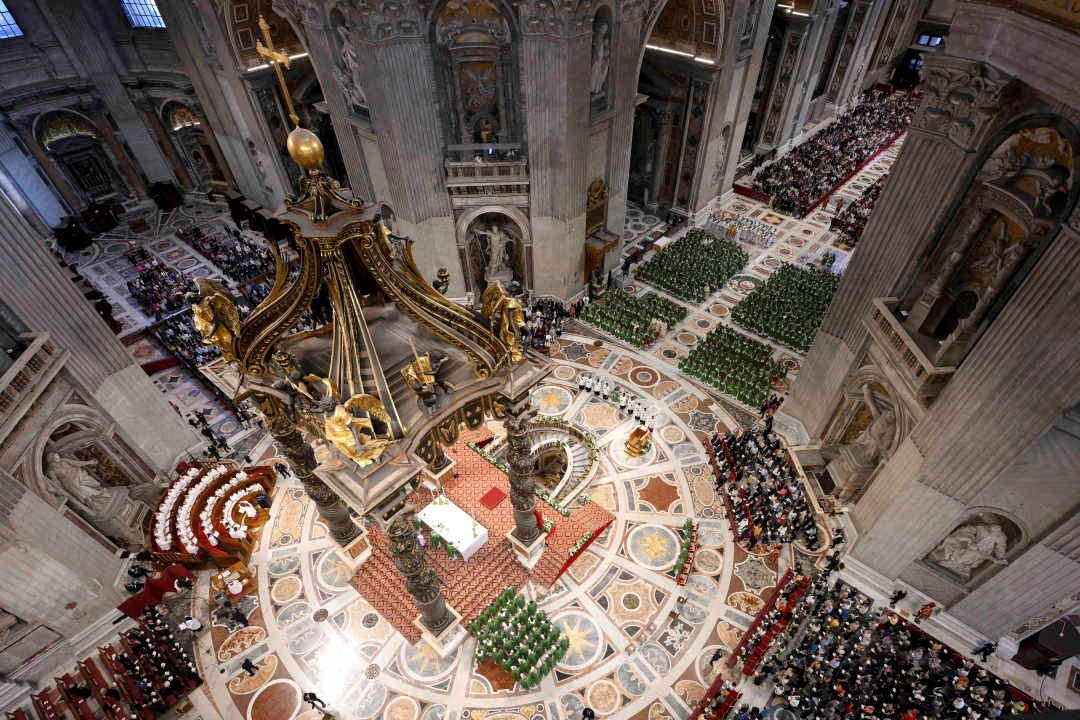
The Jubilee for Synodal Teams and Participatory Bodies, held in Rome Oct. 24-26, reaffirmed the Catholic Church’s commitment to building “an ever more synodal Church within the horizon of the hope that does not disappoint.” Participants gathered from across the world for three days of prayer, workshops, and dialogue, including an encounter with Pope Leo XIV. It was held one year after the close of the Synod on Synodality, which took place from 2022 to 24.
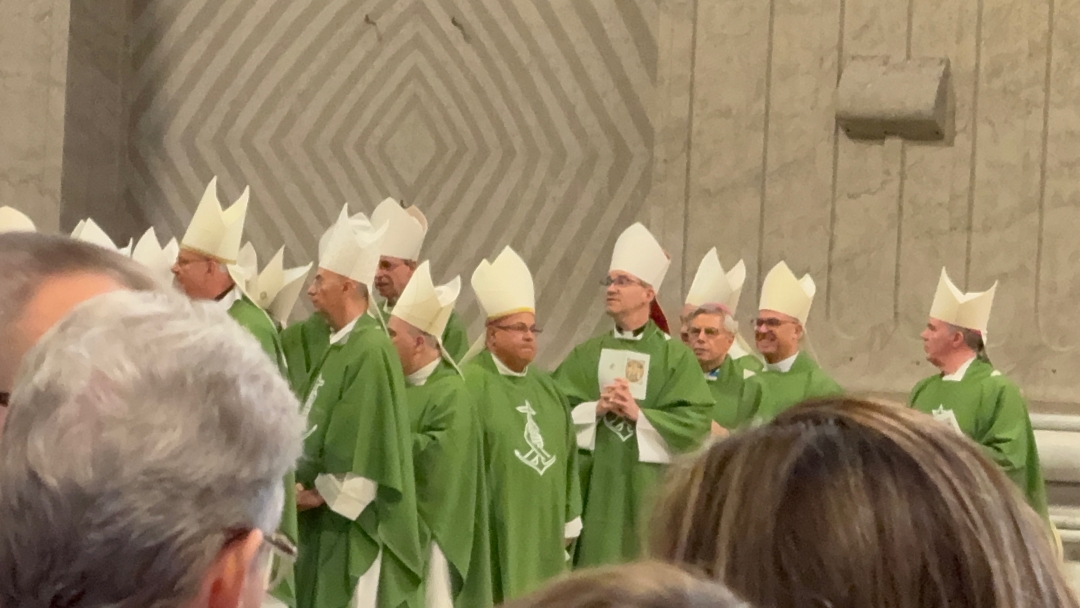
Among the 150 representatives from the United States and 15 U.S. bishops who participated in the Jubilee event were four representatives from the Archdiocese of Newark: Auxiliary Bishop Michael Saporito; Sister Donna L. Ciangio, O.P., Chancellor of the Archdiocese of Newark; Deacon Asterio Velasco, Coordinator for the Hispanic Apostolate; and Milissa Else, Assistant to the Chancellor for Pastoral Projects.

A Synodal Church
The concept of synodality goes back to the beginnings of the Church, when the Holy Spirit gathered the fearful disciples to pray, listen, and dialogue in order to discern God’s will for the early Christian community. When Pope Francis proposed the Synod on Synodality, he said, “The practice of synodality, traditional but always to be renewed, is the implementation in the history of the People of God on the way, of the Church as a mystery of communion, in the image of the Trinitarian communion.” He also said that “it is what the Lord expects from the Church of the third millennium.”
As the Synod neared its conclusion in 2023 (later extended by Pope Francis to 2024), the pope emphasized that “the expression of synodality is not yet mature” and the path ahead “is not easy, but it is beautiful, it is very beautiful.” He also encouraged the Church to continue walking down the path of synodality and included this in the Magisterium of the Church.
Pope Leo XIV has continued that message, saying in his first appearance after his election that “we want to be a synodal Church.”
A work in progress
According to Bishop Saporito, the three-day gathering revealed that synodality is still “very much a work in progress.”
He told Jersey Catholic that the dialogue with Pope Leo, in which representatives from different parts of the world presented questions to the Holy Father, revealed that the process of synodality will take time and that the challenges that the Archdiocese of Newark is facing “are not unique to us.”
In his answers, Pope Leo stressed the importance of listening and patience. “We have to understand that we do not all run at the same speed, and sometimes we have to be patient with one another, rather than a few people running ahead and leaving a lot behind, which could cause even a break in an ecclesial experience,” the pope said.
He reminded those present of Pope Francis’s vision of synodality, which is intended “to help the Church fulfill its primary role in the world, which is to be missionary, to announce the Gospel, to give witness to the person of Jesus Christ in every part of the world, to the ends of the earth.”
“I think the Holy Father was encouraging everyone to see that building our solidarity and co-responsibility in the Church is going to help us proclaim the Gospel more effectively,” Bishop Saporito said.
Reasons for optimism
During the sessions, Sister Donna, who coordinated the Archdiocesan Synod on Synodality team, also saw that teams around the world were having “similar successes and challenges in trying to engage their dioceses in the process.” She also found reasons to be optimistic about the process’s future.
“What surprised me was the openness of many of the cardinals and bishops who have listened intently to their people about challenges and needed changes in their dioceses,” Sister Donna said. “They addressed issues like outreach to youth and young adults, formation, parish and church governance, the role of women and possibilities for diaconal ordination of women, the importance of consultative bodies for discernment and decision-making, and promoting pastoral conversion in parish life.”
She came away impressed by Cardinal Jean-Claude Hollerich, S.J., Archbishop of Luxembourg and Relator General for the Synod of Bishops, who has had a key role in guiding and facilitating the synodal process. “During two workshops I attended, he spoke about the fear of change and of stepping out into the unknown,” she said. Another synodal leader, Cardinal Mario Grech, stressed the importance of listening in the process “to renew the Mission of Christ and the Church.”
“They also spoke about how unity does not necessarily mean uniformity in pastoral practice,” Sister Donna said. “Cultural practices bring richness to the Church and can be celebrated among local peoples.”
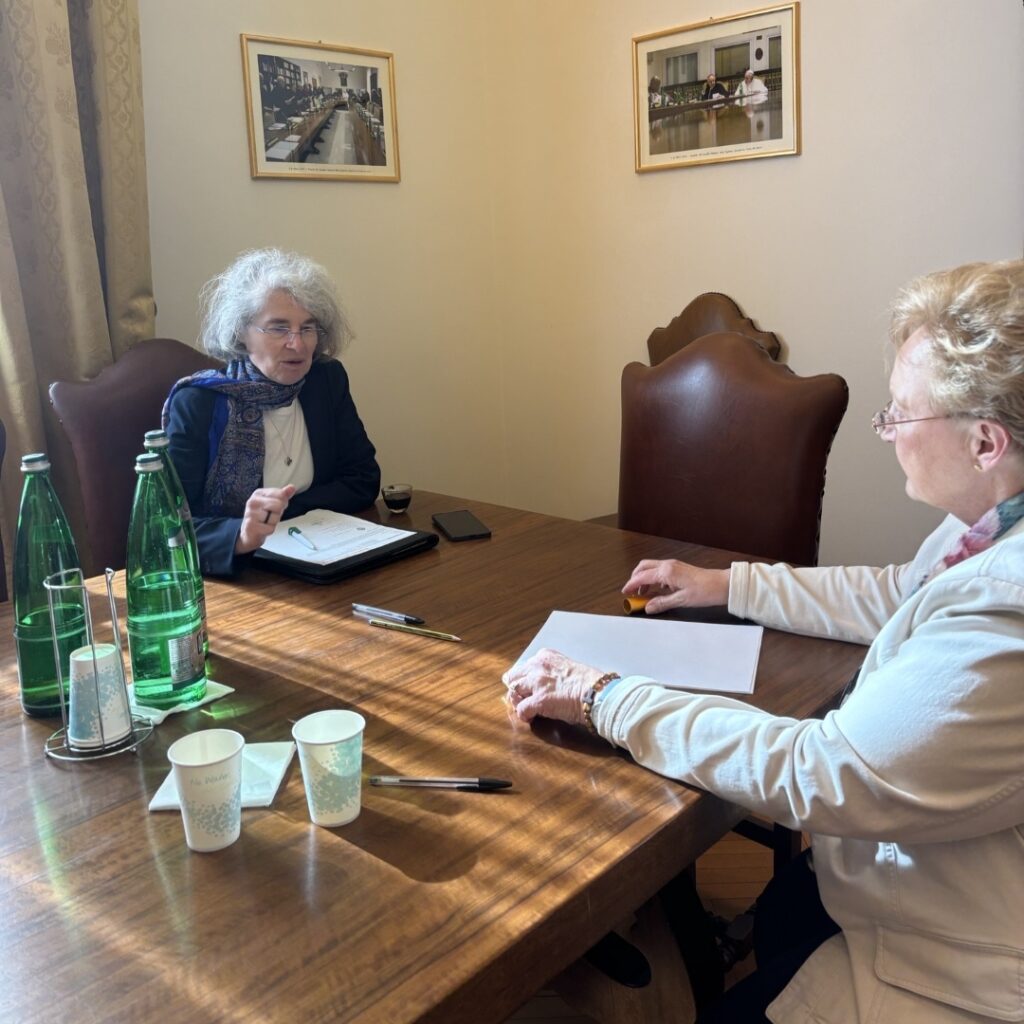
During their trip to Rome, the team from Newark also had the opportunity to meet with Sister Nathalie Becquart, X.M.C.J., Undersecretary of the General Secretariat of the Synod of Bishops, who was the first woman to have voting rights at the Synod on Synodality. The team discussed the archdiocese’s commitment to synodality and the We Are His Witnesses initiative.
Papal encounters
The biggest highlight for the group, however, was the opportunity to see Pope Leo in person for the first time. “It was amazing that a good portion of Pope Leo’s answers were given in English,” Bishop Saporito said.
“I had this feeling that he is a brother to us as an American,” Sister Donna said. “I had this feeling of closeness, that he isn’t a distant figure,” adding that he was “candid and funny” during the Jubilee encounter.
Sister Donna said that another critical moment for the group was their visit to the tomb of Pope Francis in the Basilica of Santa Maria Maggiore. “It was touching to watch hundreds of people move toward his simple tomb to pray for the pope or ask him for a blessing,” she said. “We appreciated Pope Francis for everything he did for the Church, especially with the Synod on Synodality and the way he was able to move the whole world to pray and talk to each other through Conversations in the Spirit.”
“That was very meaningful for me,” Bishop Saporito said. “I’m a bishop because of him. To stand there before his simple tomb was very moving.”
The Archdiocesan Synod Team expressed gratitude to all the faithful of the Archdiocese who contributed so much to the results of their prayerful Conversations in the Spirit and for the opportunity to participate with Pope Leo and all the synod teams all over the world.
Featured image: Pope Leo XIV presides over Mass in St. Peter’s Basilica at the Vatican Oct. 26, 2025, as part of the Jubilee of Synodal Teams and Participatory Bodies. (CNS photo/Vatican Media)