Feel like an outcast? This saint can relate
Jozef De Veuster grew up on a farm in Belgium and was expected to take over the family business. However, he saw that God had other plans for him and entered the Congregation of the Sacred Hearts of Jesus and Mary in Leuven. He took the name Brother Damien and had a heart for others.
While studying for the priesthood, Damien would pray before a picture of St. Francis Xavier, asking him to intercede on his behalf so that he could be sent as a missionary. His desire was granted three years later.
When his brother (who was a priest in the same order) couldn’t make it to their mission in the Hawaiian Islands, Damien was chosen to take his place. He was ordained a priest in Honolulu on May 21, 1864.
In 1865, the local government took drastic measures to prevent the spread of leprosy and quarantined all those who had the disease on the island of Molokai. It was essentially a death sentence as they did not have the resources to provide adequate health care.
One with the outcasts of society
The local bishop saw the dire situation of the lepers and asked for volunteers to go to the island. The hope was for a priest to go there and minister to the spiritual needs of those exiled by society. The assignment would mean eventual death among the lepers.
Upon arrival Fr. Damien said to the people that he would be “one who will be a father to you, and who loves you so much that he does not hesitate to become one of you; to live and die with you.”
His presence on the island greatly increased the quality of life of the lepers. Besides building a parish church, he helped in all aspects of life and tended to their physical and medical needs as best he could.
According to the website of Waimea, “He built homes for them, cared for their wounds, and buried them when the time came. He helped paint their houses and plant crops. He made the community turn around, and became an example of triumph. His message of servitude rang out throughout the world. The plight of Hansen’s disease victims became known, and help came in.”
A “martyr of charity”
This renewed the hope of the people there, who were previously living depressed lives as societal outcasts. He treated them with great dignity, regardless of their religion. He showed to them that even if you live on the fringes of society, you can still live joyfully.
His example and the love he showed to them lifted up their spirits and helped them see the meaning of life.
Fr. Damien remained with the people there and he eventually contracted the same disease that they suffered from. As he had prophetically proclaimed, he became one of them and then died with them in 1889.
His heroic example has led some to call him a “martyr of charity,” dying in connection to the love he poured out for his people. Pope Paul VI declared him to be “venerable” in 1977 and John Paul II beatified him in 1995. Pope Benedict XVI then confirmed the numerous miracles attributed to him and canonized him in 2009.
Under the guidelines recently instituted by Pope Francis, St. Damien’s death would perhaps be considered an oblatio vitae, a life offered for others.
This article was written by Philip Kosloski for Aleteia.
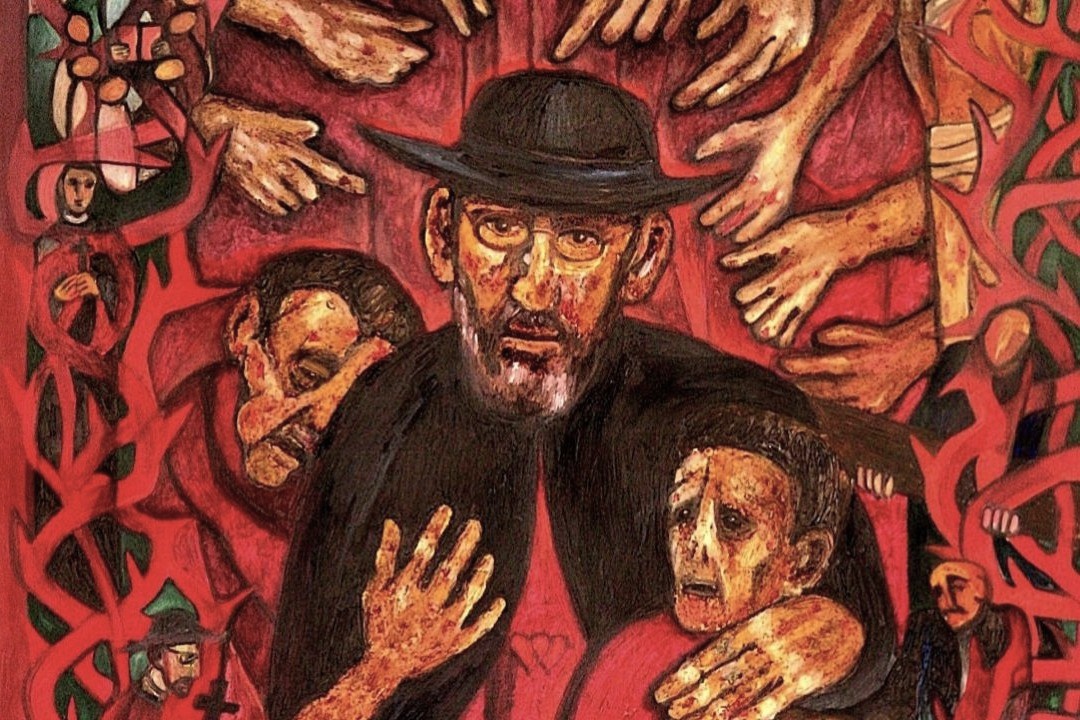
Featured image: Pater Damian de Veuster als “Apostel der Aussätzigen” (Photo by Lothar Spurzem / Wikimedia Commons / CC BY-SA 3.0 DE)