Helping Catholics with disabilities to feel valued and heard
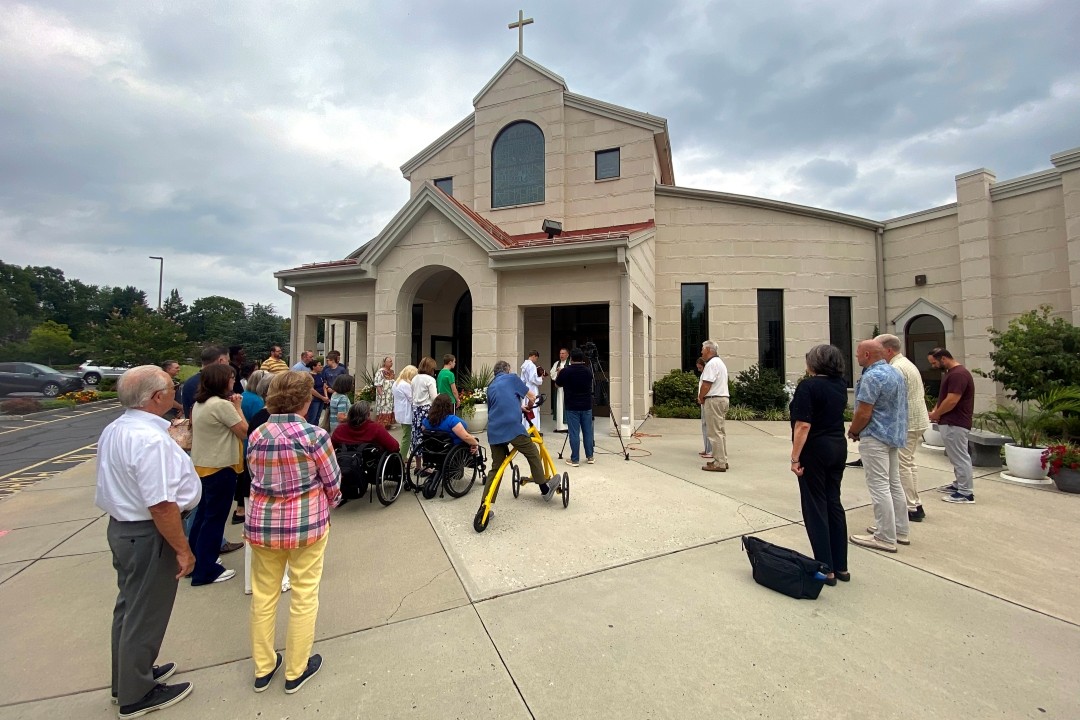
On August 30, around 35 people gathered outside Saint Helen Church in Westfield, NJ, as the pastor, Monsignor Thomas Nydegger, blessed some doors that were newly accessible after the installation of electric openers.

To an outside observer, this may have seemed like a curious cause for celebration, but for a parishioner like Lindsay Dodge, a wheelchair user, having a door at church that she can open herself means “everything” to her.
“When I was little, the church I grew up in asked my parents about what they could do to make things more accessible, but I guess life was busy, and nothing happened,” Dodge said. “I had to enter the church through the altar, then be helped off the altar to get to my seat and it was embarrassing.”
Promoting a sense of belonging and participation
Also present for the ceremony was Anne Masters, director of the Archdiocese of Newark’s Office for Pastoral Ministry with Persons with Disabilities (PwD). She stressed that creating a welcoming and supportive environment is key to promoting a sense of belonging in a parish. “Just saying someone belongs isn’t enough if not backed up by attitudes and practice that promotes possibilities for PwD to participate meaningfully in parish life and to feel a true sense of belonging,” Masters said.
In his encyclical Fratelli Tutti, Pope Francis described the experiences of many PwD, as feeling like “hidden exiles,” and that they “exist without belonging or participating.”
“Feeling a sense of belonging is a basic human need, whether someone is disabled or not,” Masters said “Pope Francis challenged the Church to ensure the active participation of PwD in the Church and in society. Not only is it due based on respect for the innate dignity of every person, but it will also change expectations of what PwD are capable of when supported appropriately with positive expectations.”
All part of one human family
“There are aspects of the environment that we can control,” Masters added. “That’s where I focus when I’m working with parishes. What are our attitudes? What are our expectations? What is the layout? Can people move around in the space?”
The goal of her office is to foster appreciation of PwD as integral members of the body of Christ, empowering parishes to support their meaningful participation in all areas of parish life and feel a true sense of belonging, so that they “aren’t just ‘given’ a space in the pew but are respected as someone who is valued and is needed,” Masters explained.
“The goal has always been for us to be together, people with and without disabilities, because we are one human family,” she said.
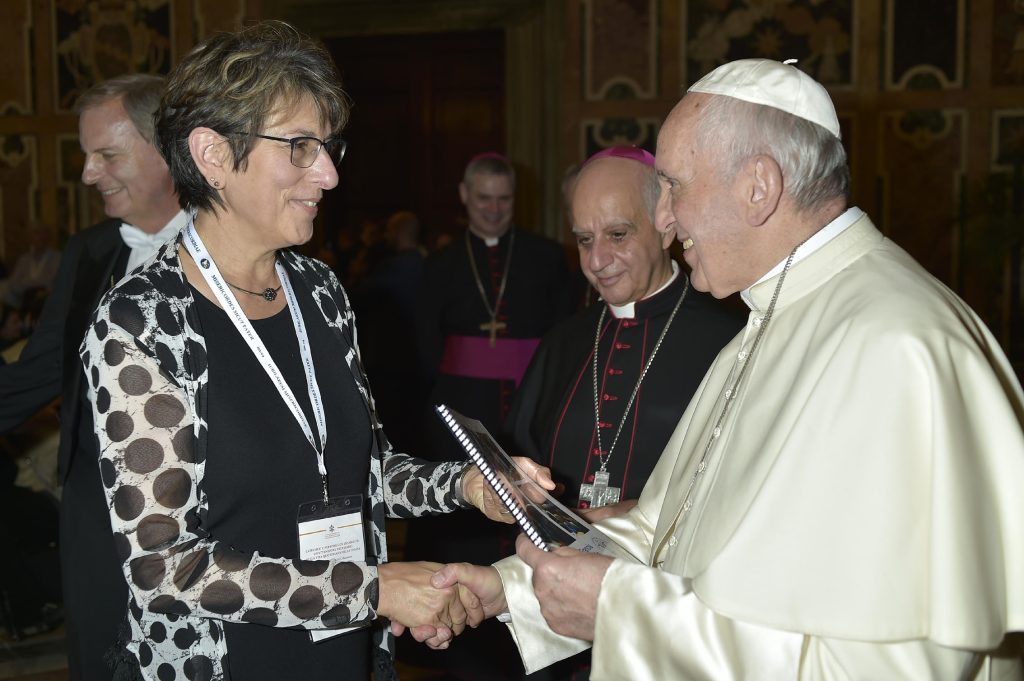
That point of view was recently articulated in an award-winning book, Indispensable: A Catholic Guide to Welcoming Persons with Intellectual and Developmental Disabilities (IDD), published by Word on Fire, for which Masters wrote an essay.
From the beginning, the ministry has sought to educate and raise awareness at the parish level, while also fostering collaborative relationships with other offices and ministries.
Masters said the ministry’s biggest challenge is changing perceptions of PwD. “No matter what we say about human dignity and the desire for human flourishing, people with disabilities, particularly IDD often continue to be seen through the stereotypes of being ‘holy innocents,’ perpetual children, or an opportunity for charity,” she said.
Those stereotypes inform outdated practices that actually treat persons with disabilities with social indignity, Masters added.
A family that listens and addresses concerns
After Monsignor Nydegger blessed the newly accessible doors at Saint Helen’s, Linsday Dodge was among the first to pass through them, joined by a fellow parishioner, Joe Revello, who uses an Alinker Walking Bike, a stylish, bright yellow, three-wheeled device with handle bars.
In addition to the main entrance doors to the church, electric openers were installed on two restroom doors and the doors into the parish’s Burke Center. They came about after a financial meeting that Revello attended at the parish. “I basically said to them, ‘You know, if I need to use the restroom, one of you will have to accompany me,’ and some of them were quite surprised,” Revello said.
Before becoming a parishioner, Revello “hadn’t been to church regularly for a while,” he explained. His wife convinced him to return, “but when I came back, I realized that I really couldn’t get in the church unless she was with me.”
He and his wife contributed to the funds needed to add electronic openers to the various doors. Revello praised the parish for listening to his concerns and “making St. Helen’s like a family.”
“I consider myself part of this community,” Revello said.
Lyndsay Dodge echoed the sentiment, saying that St. Helen’s is “just amazing.” When she first came to the parish, she was at “rock bottom,” having recently lost her closest friend. “She was my soul sister. We had the same disability,” Dodge explained.
“I was numb, and I didn’t know what to do. So, I came to my mother-in-law, ten days after my friend died and said, “Can I please come to church with you?”
Walking through the newly accessible door, Dodge said she recalled how “every single day I came into this church because I was a mess,” and how “Jesus is the only one who has built me into the place I am now.”
Initiatives supporting meaningful participation
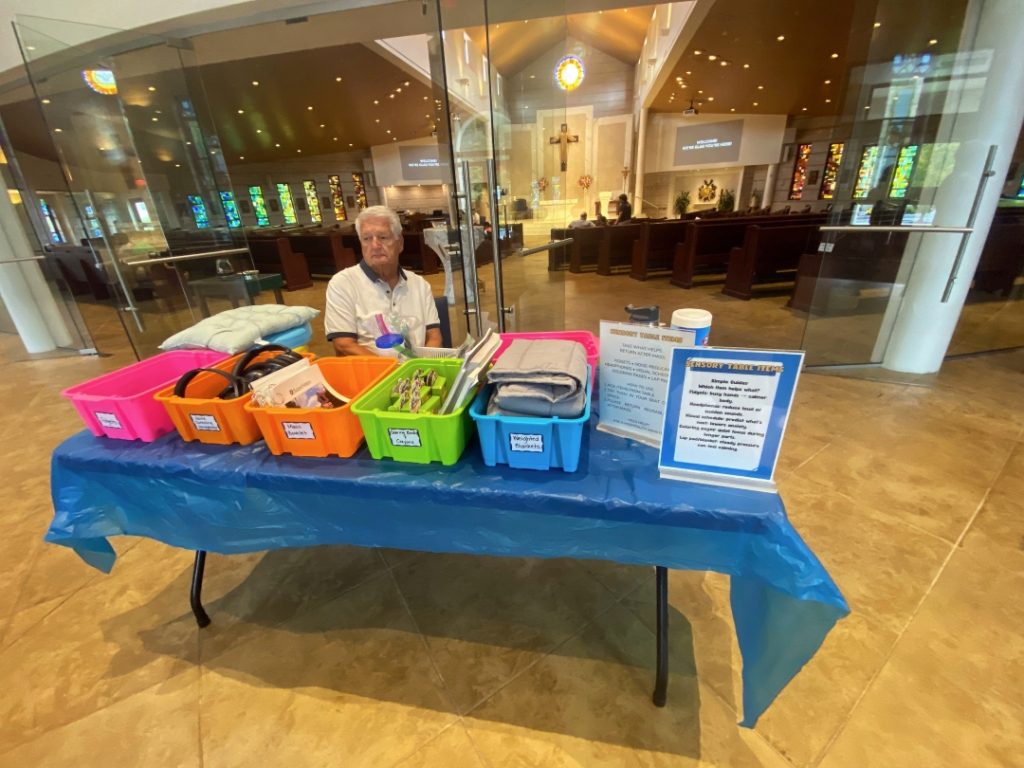
Shortly after the door blessing, the parish celebrated its Inclusive Mass, a liturgy intended to feel welcoming to people with increased sensitivity to sounds, smells, and proximity, or who may need to move around more or vocalize more than others. There are also Buddies for each person who wants one, to help them feel comfortable and welcome. Relationships are formed that carry over to other parish events. Parishioners without disabilities attend the Mass as well.
Masters said that four parishes in the archdiocese currently have Inclusive Masses, with three of them being “sensory-friendly.” Additionally, Saint Joseph Parish in Maplewood provides a sensory room for neurodivergent Mass-goers. Parishes that are interested in similar initiatives can reach out to her office for more information, Masters said.
The ministry’s newest initiative is “Serving as Witness: Accompanying Learners With and Without Disabilities Together.” Still in development, the new program is based on US Bishops’ Catechesis of Accompaniment and is focused on helping catechists become more comfortable working with learners with and without disabilities together.
Relationships between catechists and each learner and between all learners are central and will also help catechists recognize the different ways that people learn, even if they don’t have an evident disability, Masters said. She hopes to introduce the “Serving as Witness” program sometime this fall with a formal launch in early 2027.
Who are you missing?

Masters said that in New Jersey, 14 to 25 percent of students receive NJ special education services in public schools within the four counties of the archdiocese. “If those numbers aren’t represented in your parish’s catechetical program, then you’re missing kids,” she said. While the percentages vary by parish, overall, parishes report that only 4.4 percent enrolled in their catechetical and sacrament programs have a disability.
“So, you’re not only missing many children and teens, you’re also probably missing families, because the most recent studies indicate that as many as 48 percent of parents have left their faith communities because their son or daughter with a disability was not supported and welcomed.”
She added that later this year, the ministry will also provide parishes with an assessment guide to help them ascertain areas of potential need and growth in serving persons with disabilities, including physical access and participation support.
To learn more, visit the Office for Pastoral Ministry with Persons with Disabilities.
Featured image: On August 30, Monsignor Thomas Nydegger blessed some accessible doors with newly installed electric openers at St. Helen’s Parish in Westfield, NJ. (Photos by John Touhey / Archdiocese of Newark)